Launch offer — valid today only

Your A License Written Exam and Oral Quiz: the SIM Topics, One Page Each With Every Concept Drawn Step by Step!

Handles, pull priorities, decision altitude, malfunctions, the canopy check, the landing pattern, landing hazards and the BSRs. In the SIM, they're a wall of text. Here every topic fits on one page, with the drawing and what you need to remember. 60 illustrated pages.

I WANT TO STUDY IT WITH DRAWINGS

🔒 Secure checkout · PDF by email · 30-day guarantee

One topic per pageOne topic per page, every concept drawn
60 illustrated pages9 parts, from the A license requirements to exam practice
Up-to-date sourcesUSPA SIM 2026 edition and FAR Part 105

This Is What the Pages You Will Study Look Like

One topic per page, the drawing that shows you how it works, and boxes with what you need to know:

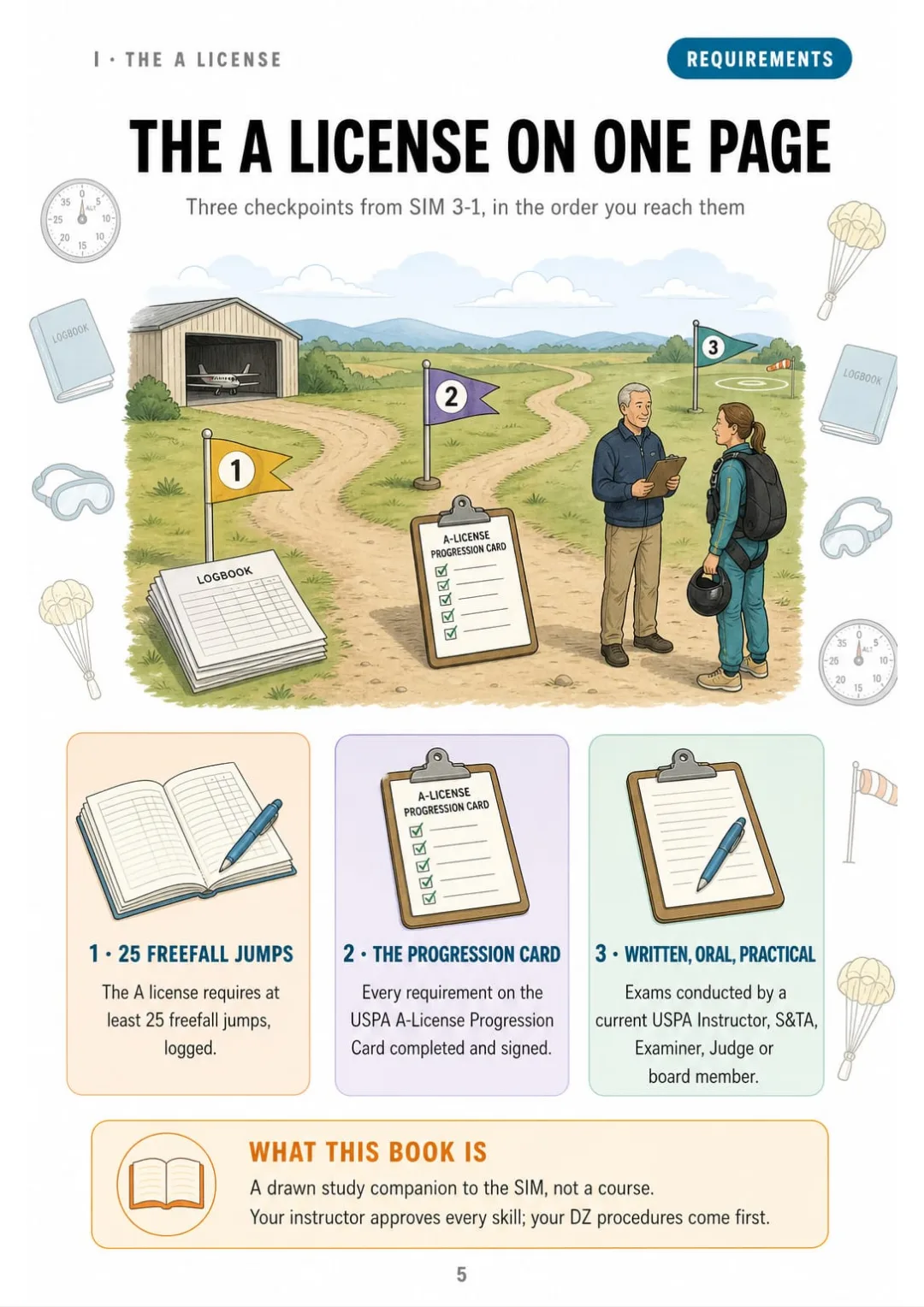
SIM 3-1 drawn as a trail: 25 freefall jumps, the progression card, and three exams.
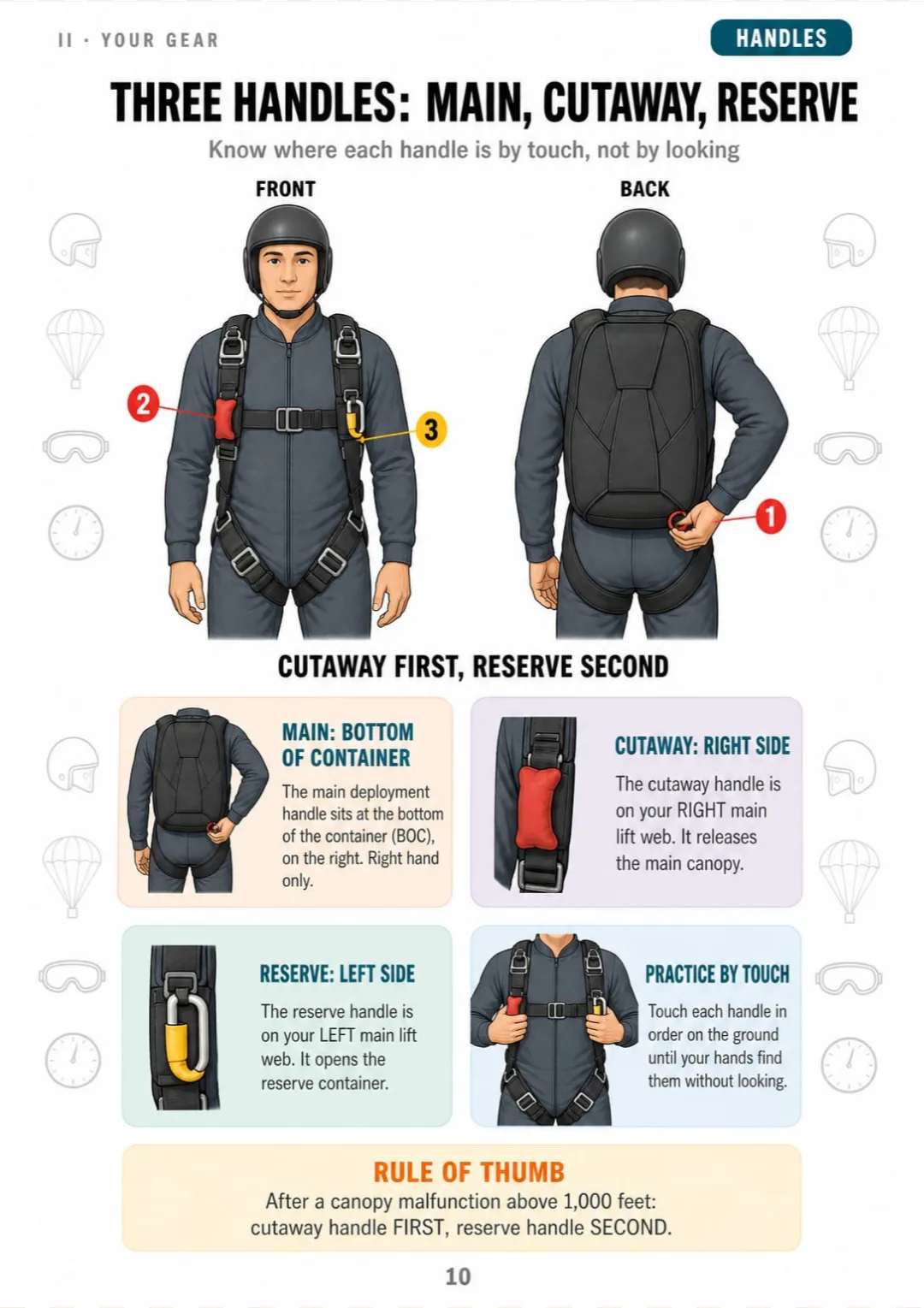
Main at the BOC, cutaway on the right, reserve on the left: cutaway first, reserve second.
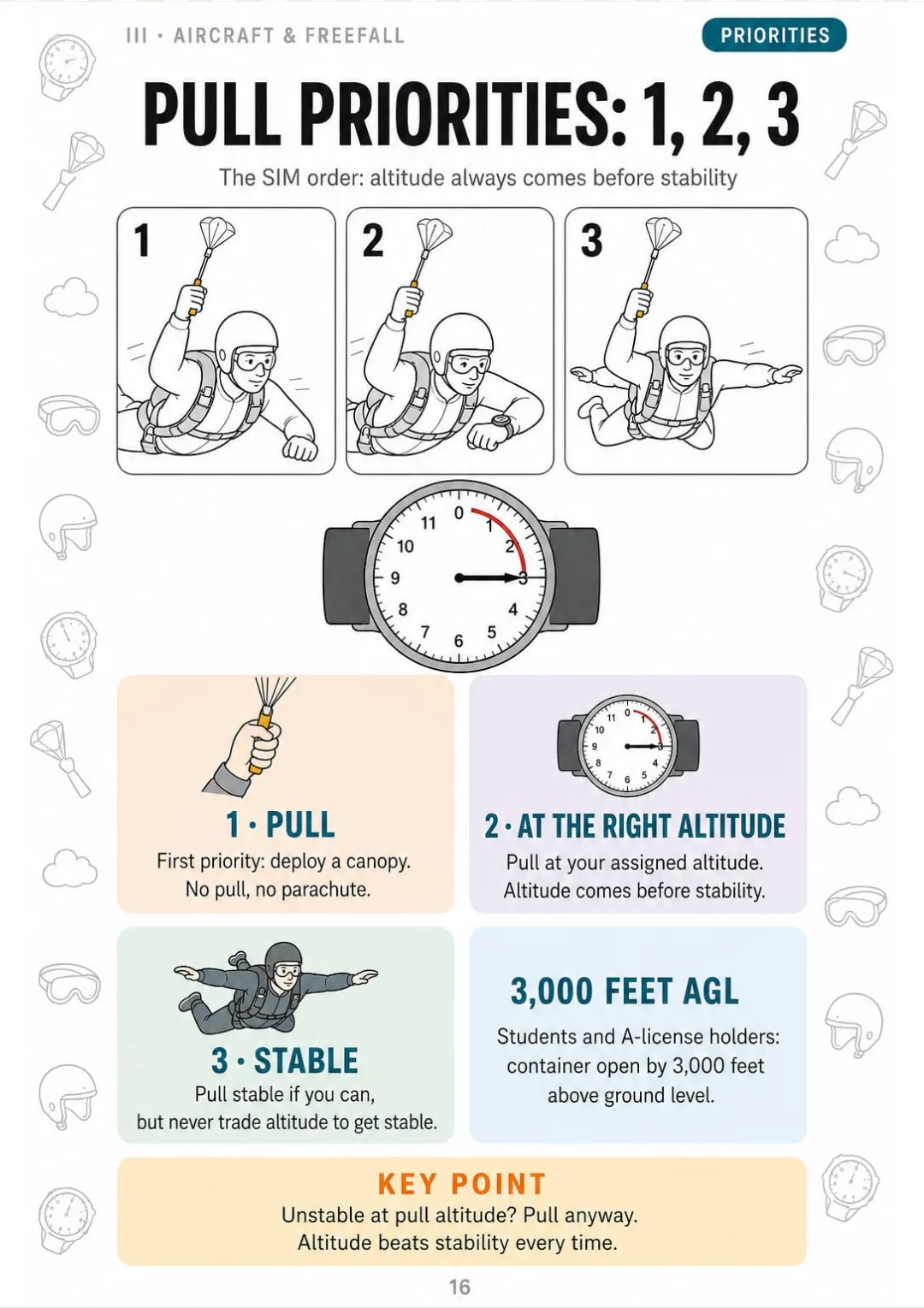
The SIM's three pull priorities, plus the 3,000-foot opening for students and A licenses.
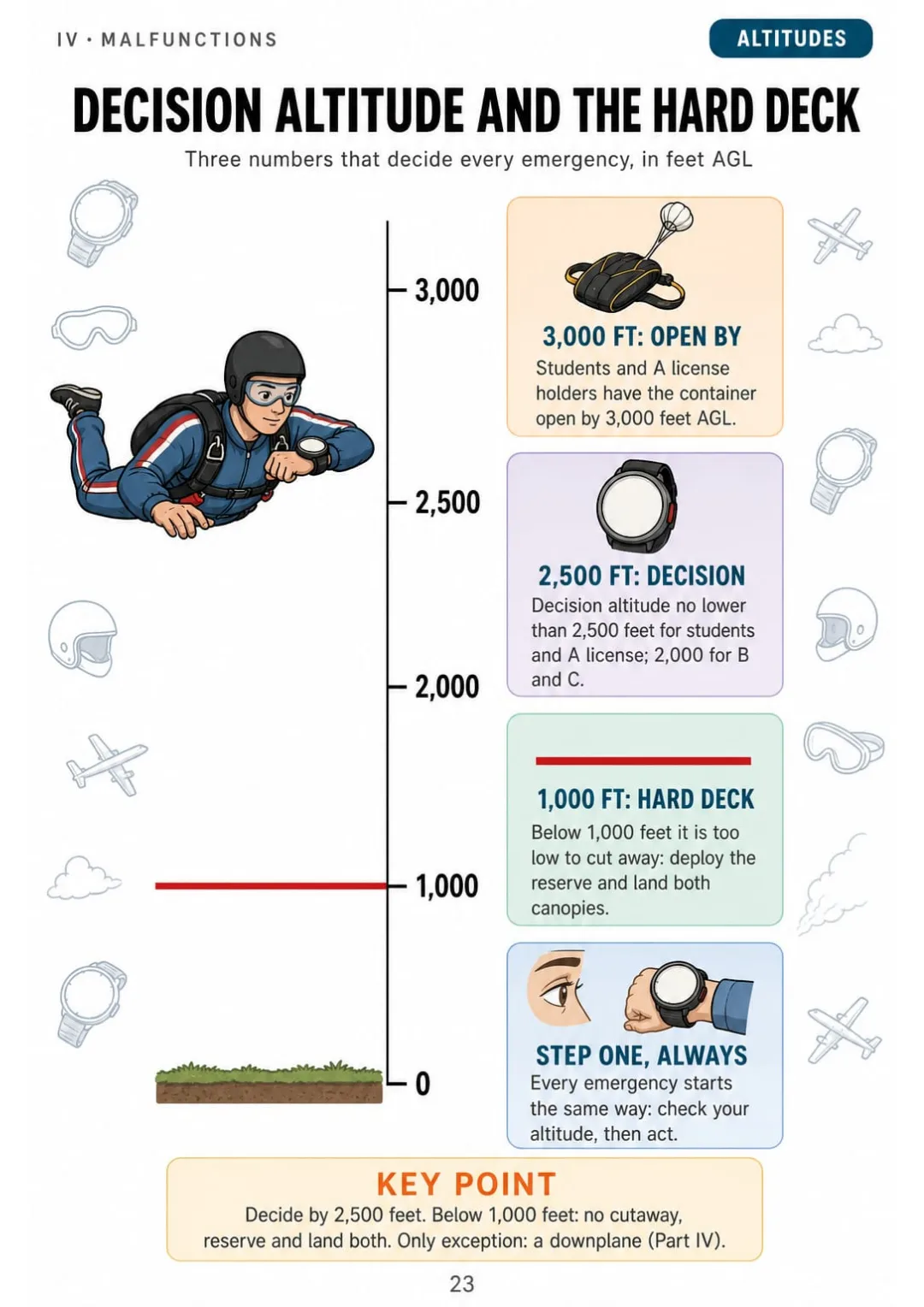
3,000 ft open by · 2,500 ft decision altitude · 1,000 ft cutaway hard deck
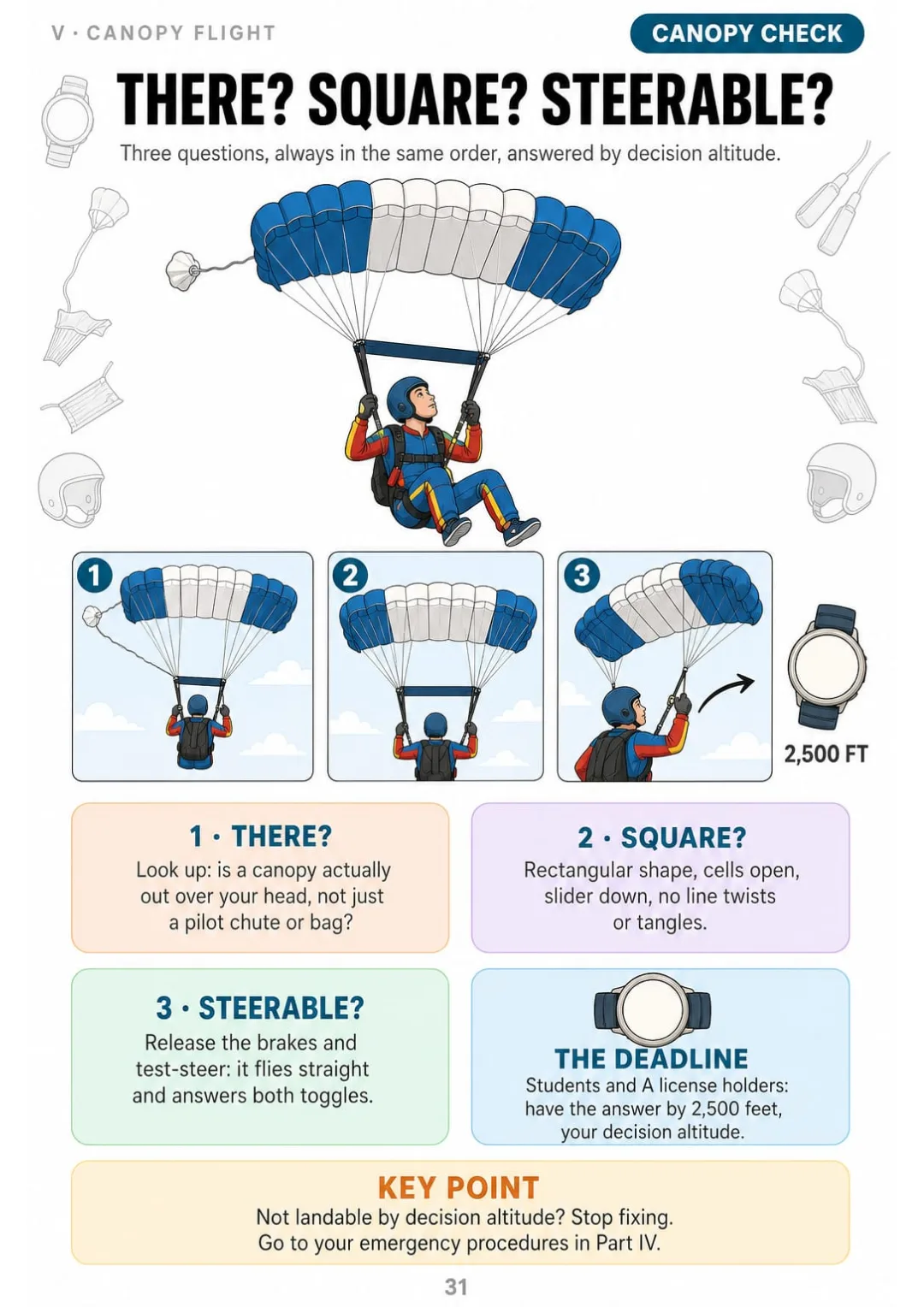
The canopy check in 3 boxes: There? Square? Steerable? — by 2,500 feet.
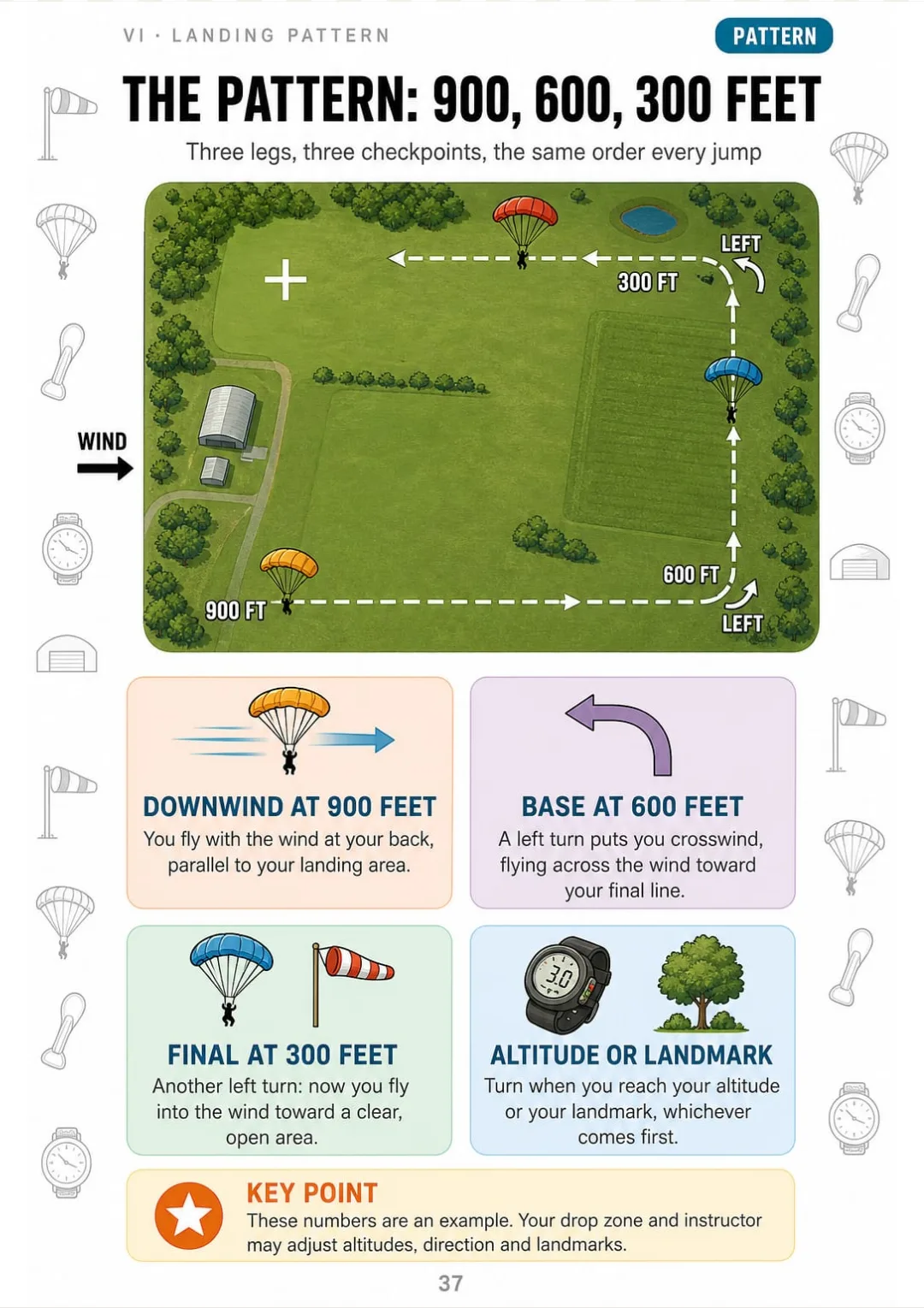
Downwind 900 ft, base 600 ft, final 300 ft, all drawn from above
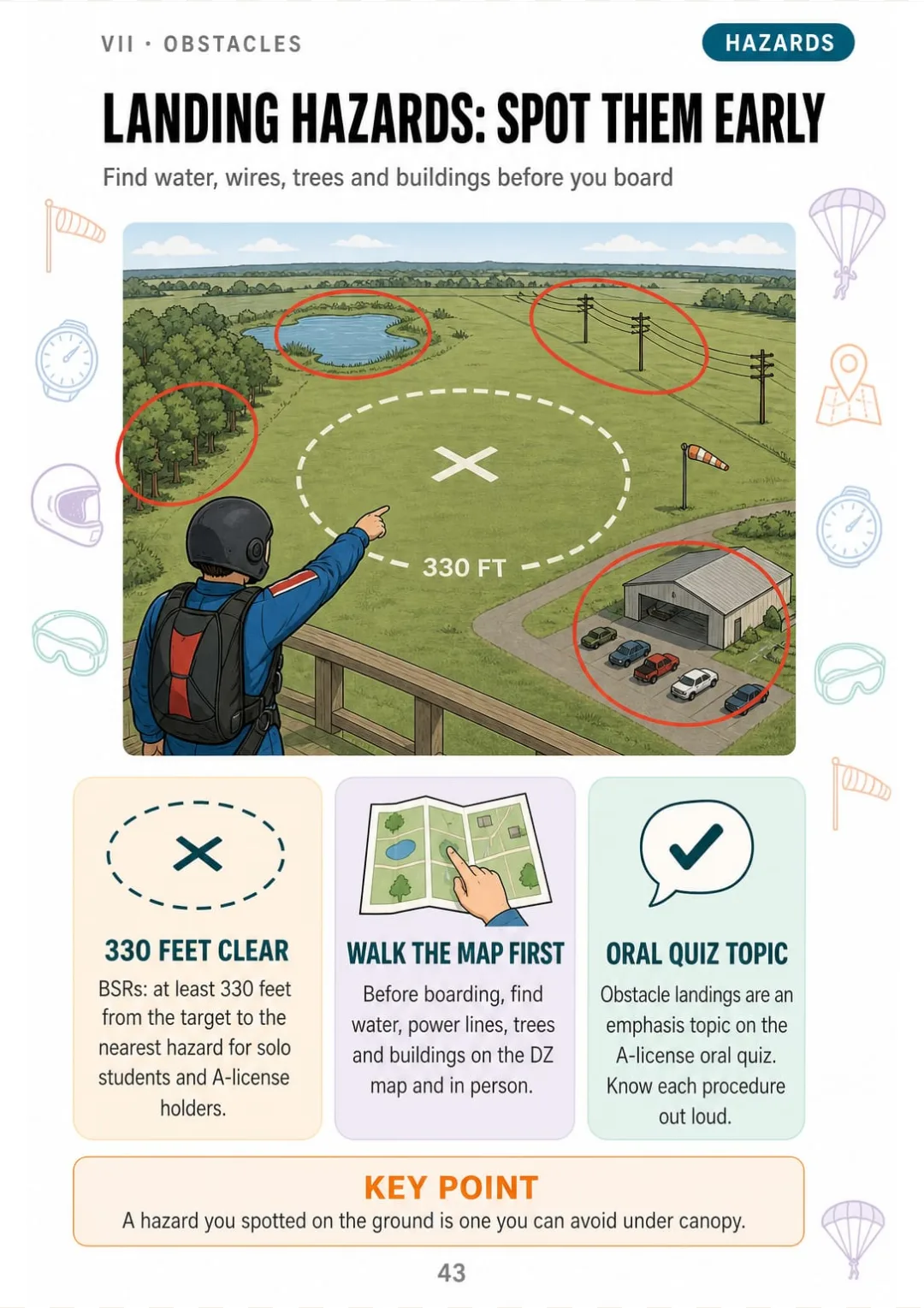
BSRs: 330 feet from target to nearest hazard for students and A-license holders
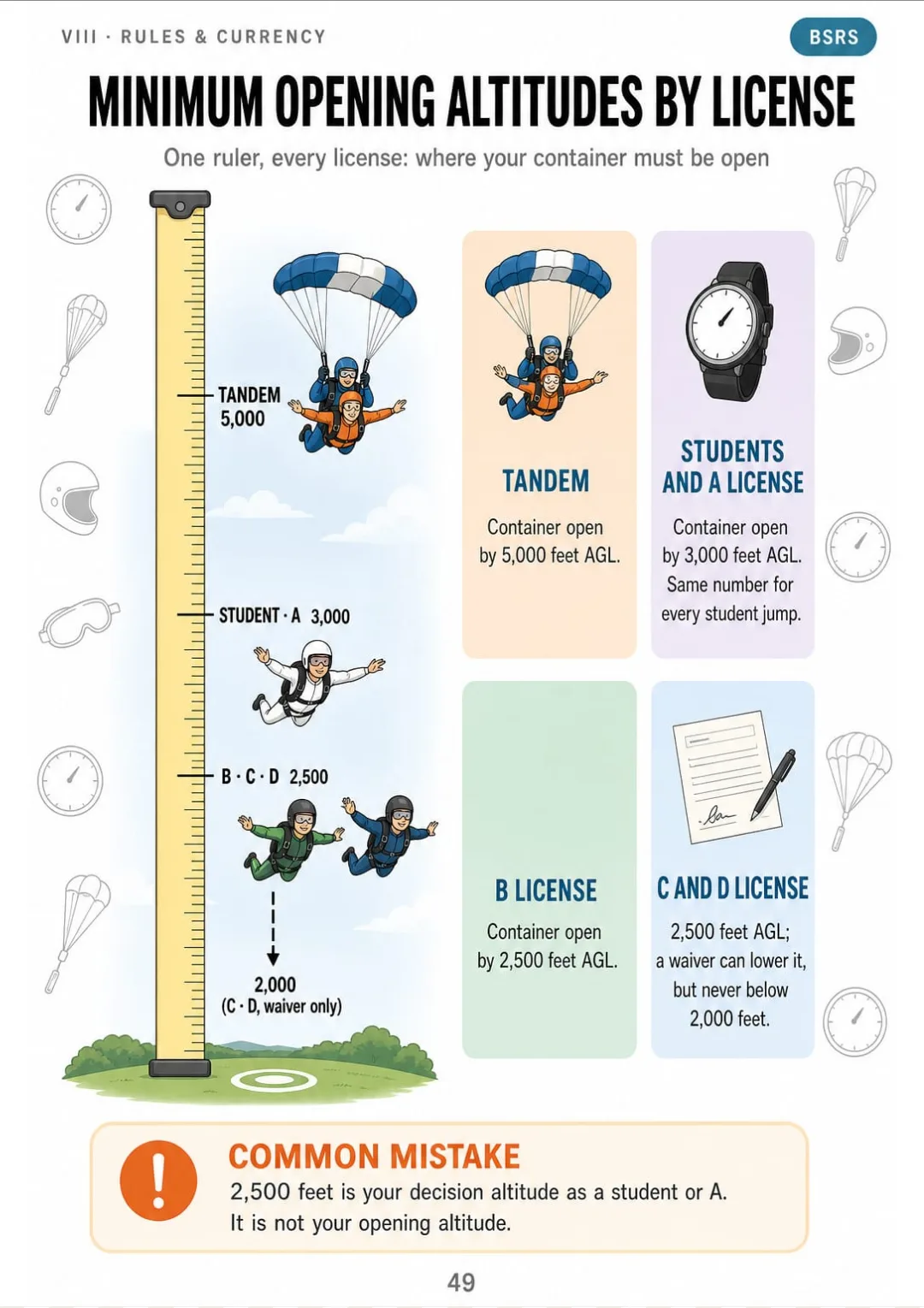
Tandem 5,000 · Student and A 3,000 · B 2,500 · C/D 2,500 (waiver to 2,000) feet AGL

Swipe to see more →

These are real pages from the book. The table of contents is the full one: 9 parts and 56 topics.

It's Not the Procedures. It's the Wall of Text Around Them.

You've read the SIM's pull priorities three times. You close the manual...

...and you're no longer sure which one comes first, or which altitude goes with it. They were just lines in a row.

The SIM's three pull priorities, plus the 3,000-foot opening for students and A licenses.

Here the pull priorities are one page, numbered 1, 2, 3: pull, pull at the correct altitude, pull while stable, with the 3,000-foot opening for students and A licenses right next to them.

And on the pages next to it, every topic gets its own: the three handles, decision altitude, the canopy check, the landing pattern and the BSRs.

First you understand why it's done that way. Then the order sticks on its own.

SEE THE DIFFERENCE

Stop memorizing procedures you can't picture:

THIS
  • Pages and pages of dense text
  • Procedures without a single drawing
  • On the exam, you don't know where to start
The student harness-and-container system incorporates three primary operating handles, each of which must be identified prior to emplaning. The main deployment handle, typically a throw-out pilot chute handle, is located at the bottom of the container (BOC). The cutaway handle is mounted on the right main lift web, while the reserve ripcord handle is mounted on the left main lift web. In the event of a malfunction requiring a cutaway, the jumper shall locate both handles, activate the cutaway handle first and subsequently activate the reserve handle.
FOR THIS
  • Every procedure drawn
  • One topic per page, with the rules in boxes
  • You remember it because you've seen it
Main at the BOC, cutaway on the right, reserve on the left: cutaway first, reserve second.
CONTENTS

Take a Look at the 9 Parts and 56 Topics

The A license and its exams, your gear, aircraft and freefall, deployment problems and malfunctions, canopy flight, the landing pattern, obstacles and landing emergencies, rules and currency, and exam practice: 60 pages, each topic drawn

IThe A License and Its Exams · pp. 5-9
  1. The A License Requirements on One Page
  2. The Written Exam: 40 Questions, 75%, Closed Book
  3. The Oral Quiz and the Check Dive
  4. What the SIM Study Guide Lists for the A License
  5. A Study Plan, Category by Category
IIYour Gear · pp. 10-15
  1. Three Handles: Main, Cutaway and Reserve
  2. Parts of the Canopy: Cells, Lines, Slider, Toggles
  3. Activation, Deployment, Inflation
  4. RSL and AAD: Back-Ups, Not Plans
  5. Student Equipment Required by the BSRs
  6. Four Gear Checks Before Every Jump
IIIAircraft, Exit and Freefall · pp. 16-22
  1. Altitude Awareness and Pull Priorities
  2. Around the Aircraft and Aircraft Emergencies
  3. The Arch and the Neutral Body Position
  4. Wave-Off, Reach, Pull
  5. Turns, Heading and Forward Movement
  6. Flat Tracking
  7. Spotting and Exit Separation
IVDeployment Problems and Malfunctions · pp. 23-30
  1. Decision Altitude and the 1,000-Foot Hard Deck
  2. Total vs Partial Malfunctions
  3. No Handle, Hard Pull, Pilot-Chute Hesitation
  4. Pilot Chute in Tow: Two Accepted Procedures
  5. Partial Malfunction: Cut Away, Then Reserve
  6. Premature Container Opening
  7. Two Canopies Out: Biplane, Side by Side, Downplane
  8. Reserve Activation: Look Over Your Right Shoulder
VCanopy Flight · pp. 31-36
  1. The Canopy Check: There? Square? Steerable?
  2. Line Twists and Common Opening Problems
  3. Toggles, Turns and the Flare
  4. Holding, Running and Crosswind
  5. Right of Way and Canopy Collisions
  6. Canopy Emergency Drills: Braked Turns and Low-Turn Recovery
VIThe Landing Pattern and Landings · pp. 37-42
  1. The Landing Pattern: 900, 600 and 300 Feet
  2. Landing Priorities and the PLF
  3. When to Flare
  4. High-Wind and Low-Wind Patterns
  5. Downwind Landings and Low Turns
  6. Choosing an Alternate Landing Area by 2,000 Feet
VIIObstacles and Landing Emergencies · pp. 43-48
  1. Landing Hazards: Spot Them Early
  2. Water Landings
  3. Power Lines
  4. Trees
  5. Buildings and Other Objects
  6. Landing Out and Respecting Property
VIIIRules, Groups and Staying Current · pp. 49-55
  1. Minimum Opening Altitudes by License
  2. Ground Wind Limits for Students
  3. FAR 105 and Cloud Clearance
  4. Group Jumps: Breakoff and Tracking
  5. Freeflying and Camera Flying: First Notes
  6. Currency Training
  7. What Your A License Lets You Do
IXExam Practice · pp. 56-60
  1. Exam-Style Questions 1-8
  2. Exam-Style Questions 9-16
  3. Exam-Style Questions 17-24
  4. Exam-Style Questions 25-32
  5. Exam-Style Questions 33-40

What If Every Topic Fit on a Single Page?

What if every A license topic fit on a single page?

Instead of rereading half a page on the landing pattern without being able to see it...

...you open the page and find the drop zone from above, with the wind arrow and the three legs: downwind at 900 feet, base at 600, final at 300.

The canopy check in 3 boxes: There? Square? Steerable? — by 2,500 feet.

And the handles, the pull priorities, decision altitude, the canopy check and the landing hazards turn into drawings and tables you can read at a glance.

You stop repeating and start understanding.

That's The A License Sketchbook: 60 pages in 9 parts, 56 topics each drawn on its own page, and 40 exam-style questions at the end. Same order every time, so you know where each answer lives.

Because what your brain sees organized, it remembers.

Here Is What You Get with The A License Sketchbook:

Ipp. 5-9

The A License and Its Exams

The A license requirements, the written exam, the oral quiz and the check dive, what the SIM study guide lists, and a study plan category by category.

IIpp. 10-15

Your Gear

The three handles, parts of the canopy, activation to inflation, RSL and AAD as back-ups, student equipment under the BSRs, and four gear checks before every jump.

IIIpp. 16-22

Aircraft, Exit and Freefall

Altitude awareness and pull priorities, around the aircraft, the arch, wave-off, reach and pull, turns and heading, flat tracking, spotting and exit separation.

IVpp. 23-30

Deployment Problems and Malfunctions

Decision altitude and the hard deck, total vs partial malfunctions, hard pulls, pilot chute in tow, cutaway then reserve, premature openings and two canopies out.

Vpp. 31-36

Canopy Flight

The canopy check, line twists, toggles and the flare, holding, running and crosswind, right of way, and canopy emergency drills.

VIpp. 37-42

The Landing Pattern and Landings

The 900-600-300 pattern, landing priorities and the PLF, when to flare, high- and low-wind patterns, low turns, and choosing an alternate by 2,000 feet.

VIIpp. 43-48

Obstacles and Landing Emergencies

Spotting hazards early, water landings, power lines, trees, buildings and other objects, and landing out while respecting property.

VIIIpp. 49-55

Rules, Groups and Staying Current

Minimum opening altitudes by license, student wind limits, FAR 105 and cloud clearance, group breakoff, first notes on freefly and camera, currency, and what your A license lets you do.

IXpp. 56-60

Exam Practice

40 exam-style questions in five sets of eight, written for this book, to see which topics need another look.

At the end of the book: 40 exam-style questions, written for this book.
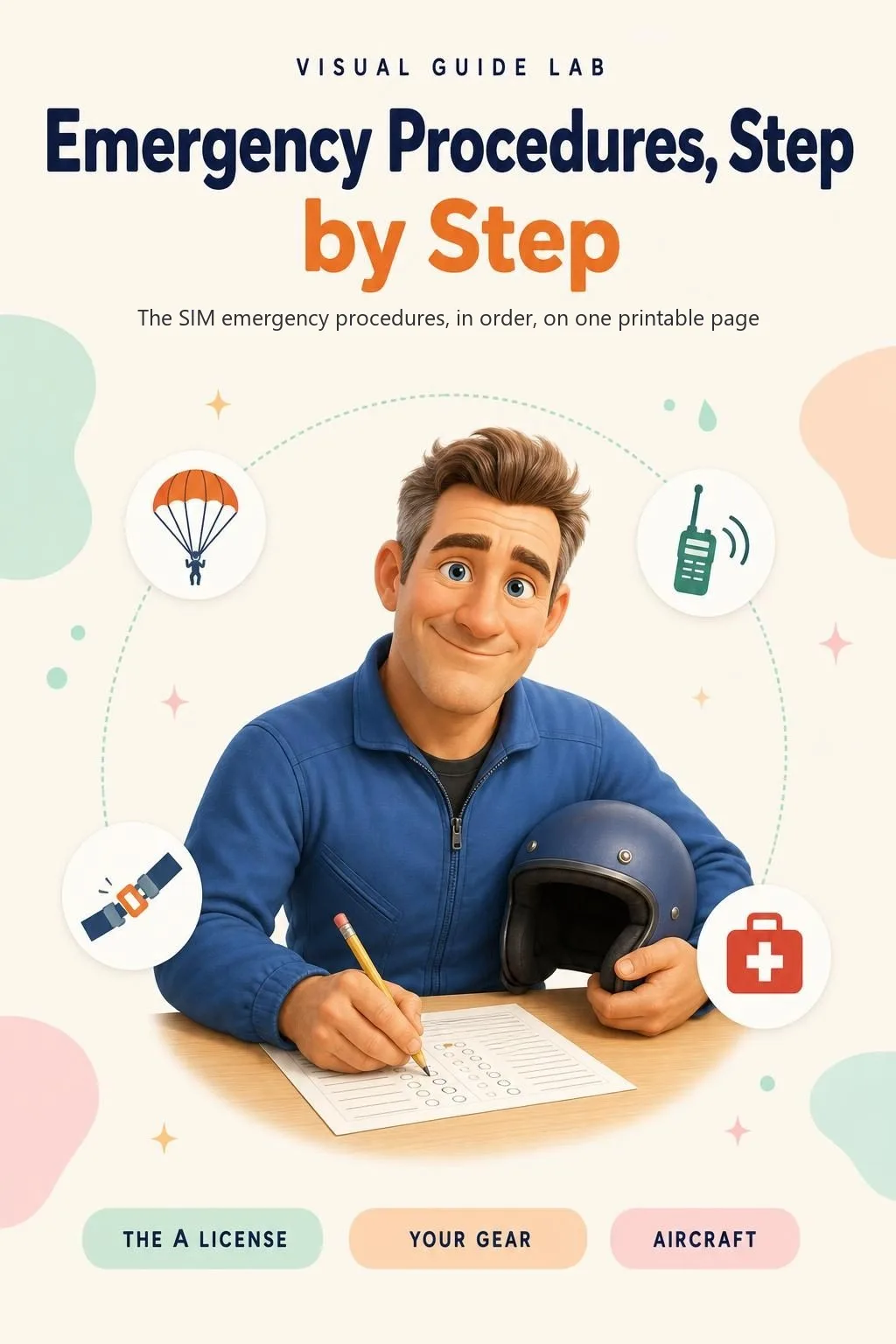
And That Is Not All: 2 More Books, Free

Emergency Procedures, Step by Step

BONUS 1: «Emergency Procedures, Step by Step»

Value on its own: US$ 17.90

The SIM emergency procedures in order on one printable page, with the 3,000 / 2,500 / 1,000-foot altitude ladder, to go over with your instructor before a currency jump.

200 Skydiving Terms on Cards

BONUS 2: «200 Skydiving Terms on Cards»

Value on its own: US$ 14.90

AGL, BOC, RSL, AAD, PLF, CEP, holding area, decision altitude: the terms the SIM takes for granted, on printable cards with the term on the front and a one-line definition and a small sketch on the back.

The A License Sketchbook + 2 Free Books

  • The A License Sketchbook: 60 illustrated pagesUS$ 63
  • BONUS 1: Emergency Procedures, Step by StepUS$ 17.90
  • BONUS 2: 200 Skydiving Terms on CardsUS$ 14.90
  • High-resolution PDF to printIncluded
Total value US$ 95.80
YOUR PRICE:
US$ 27
You save US$ 68.80
YES, I WANT THE A LICENSE SKETCHBOOK FOR US$ 27

📄 This is a digital PDF book sent to your email: nothing is printed or shipped.

Secure purchaseEncrypted payment30-day guarantee

PDF by email: The A License Sketchbook reaches your inbox as a PDF, and the two free books come by email too. One-time payment, no installments or hidden costs.

Is This Book for You?

You're in your progression

You're in your progression

Categories A to H, one topic per page, to review between jumps on the weekend and know what each category covers.

Your written exam is coming up

Your written exam is coming up

Every SIM topic for the A license in the same order, and 40 exam-style questions at the end to see what needs another look.

You're coming back after a break

You're coming back after a break

A quick review of the handles, pull priorities, decision altitude and the pattern before your currency training with your instructor.

To Sum Up: Here Is What You Get

US$ 95.80US$ 27
YES, I WANT THE A LICENSE SKETCHBOOK FOR US$ 27

📄 This is a digital PDF book sent to your email: nothing is printed or shipped.

30DAYS
GUARANTEE

30-Day Guarantee

30-day guarantee: tell us what didn't work and we'll refund 100%.

You have 30 days to try The A License Sketchbook and the two bonus books. If it doesn't work for you, tell us what didn't work and we'll refund 100% of what you paid. One-time payment, no subscriptions.

Frequently Asked Questions

How do I get it?

After your purchase you get an email with The A License Sketchbook as a high-resolution PDF, to read on your phone or print. The two bonus books, Emergency Procedures, Step by Step and 200 Skydiving Terms on Cards, also come by email.

Is it a monthly payment or one-time?

One-time payment. No installments, no subscription.

Who is it for?

For students in AFF, IAD, static line or tandem progression working toward the USPA A license, for anyone retaking the written exam, and for jumpers coming back after a break who want to review the SIM. Check the table of contents above to see the topics.

What sources is it based on?

The USPA Skydiver's Information Manual (SIM), 2026 edition: sections 1, 2-1 (BSRs), 3-1, 4-1, 4-2, 5-1, 5-2 and 5-7, and FAR Part 105. The SIM stays free and stays the reference. This book doesn't add new rules: it takes the A license topics spread across those sections and puts each one on a single drawn page, always in the same order. Every number on a drawing matches its text and the SIM. If your drop zone teaches a different number or procedure, follow your DZ.

Is this official USPA material?

No. It's an independent study companion to the SIM. It isn't published by, affiliated with or endorsed by USPA or the FAA, and it isn't a license card or an official document.

Does it replace my instructor or my training?

No. It's a study book, not a skydiving course. Your instructor trains and approves every skill, and where your drop zone sets a different procedure, you follow it.

Are the practice questions the real exam questions?

No. The 40 exam-style questions are written for this book. They aren't official USPA exam questions: they're there to practice the topics.

Can I print it?

Yes. It's a PDF you can print at home or at a print shop and bring to the drop zone, or keep on your phone.

What if I don't like it?

You have 30 days. Tell us what didn't work and we'll refund 100%.

One Last Thing Before You Decide...

You don't have to reread the same page hoping this time it sticks.

You don't have to memorize altitudes and procedures you can't picture.

And you definitely don't have to walk into your exams not knowing where to start.

There's a simpler way. And it's one click away. Now it's your turn.

One-time payment: US$ 27 · Guarantee: 30 days · PDF by email

YES, I WANT THE A LICENSE SKETCHBOOK FOR US$ 27

📄 This is a digital PDF book sent to your email: nothing is printed or shipped.